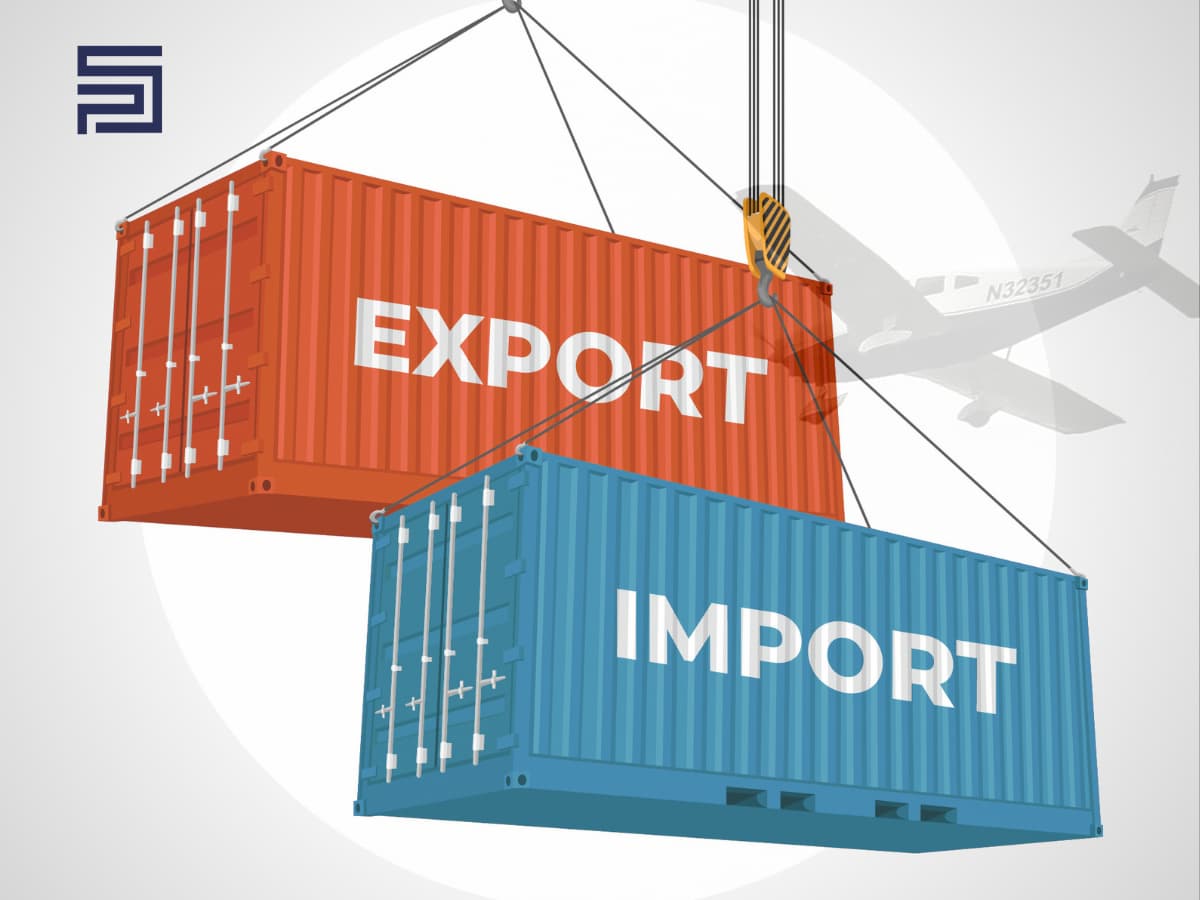

Air freight import and export procedures may seem complex, but they’re straightforward once you know the steps.
This guide explains the export and import processes, key documents, customs, and common pitfalls so you can ship with confidence.
Looking for reliable air freight export services? Contact SARA today and let our 20+ years of experience work for you. We handle everything from documentation to delivery, so you can focus on growing your business.
What is Air Freight?
Air freight refers to the transportation of goods via aircraft from one country to another.
It is the fastest mode of international shipping, making it ideal for time-sensitive, high-value, or perishable cargo.
Unlike sea freight, which can take weeks or even months, air freight typically delivers goods within 7 to 10 days, depending on the origin and destination.
This speed comes at a premium, but for many businesses, the cost is justified by the reduced inventory holding time, lower warehousing needs, and the ability to respond quickly to market demands.
Air freight is commonly used for electronics, pharmaceuticals, fashion items, perishable goods, automotive parts, and other high-priority shipments where speed and reliability are paramount.
Overview: Export vs Import - High-Level Flow
Understanding the difference between the air freight export process and the air freight import process helps you prepare for what's ahead, whether you're sending goods abroad or receiving them.
Air Freight Export Flow:
The export process begins with the shipper (exporter) in the origin country.
Here's the high-level flow:
The exporter receives a quote and books cargo space with a freight forwarder or airline, prepares and packs the goods according to international standards, completes all export documentation (commercial invoice, packing list, export declaration, air waybill), hands over the cargo to a ground handling agent (GHA) at the airport, and clears customs exit procedures in the origin country.
Finally, the cargo is loaded onto the aircraft and departs for the destination.
Air Freight Import Flow:
The import process starts when the cargo arrives at the destination airport.
Here's the high-level flow:
The airline sends a pre-arrival notice to the consignee or freight forwarder, and the cargo lands. It is unloaded from the aircraft, customs authorities review and clear the shipment (duties and taxes are assessed and paid), and the goods are either delivered directly to the consignee or moved to a warehouse for storage.
Both processes involve multiple stakeholders, including freight forwarders, customs brokers, airlines, ground handling agents, and customs authorities, each playing a critical role in ensuring the cargo moves smoothly from origin to destination.
At SARA, we have gone through this workflow many times. You can trust us to handle yours seamlessly.
Step-by-Step: The Air Freight Export Process (Detailed)
Exporting goods by air involves careful planning and adherence to international regulations. Let's break down the airfreight export procedures step by step.
1) Quote & Booking (Incoterms & Rate Factors)
The export journey begins with obtaining a quote from a freight forwarder or airline.
The air freight export rate you receive depends on several factors:
- the weight and volume of your cargo (airlines charge based on chargeable weight),
- the origin and destination airports,
- the type of goods being shipped (dangerous goods, perishables, or general cargo),
- the service level required (standard vs express), and
- current market conditions (fuel surcharges, seasonal demand).
When requesting a quote, you'll also need to specify the Incoterms (International Commercial Terms) that define the responsibilities between buyer and seller.
Common Incoterms for air freight include:
- EXW (Ex Works, where the buyer handles all shipping),
- FOB (Free on Board, where the seller delivers to the origin airport),
- CIF (Cost, Insurance, and Freight, where the seller covers freight and insurance), and
- DDP (Delivered Duty Paid, where the seller handles everything, including customs clearance and duties).
At this stage, experienced freight forwarders like SARA will assess your needs, recommend the best routing and carrier options, and provide a transparent breakdown of export air freight charges.
2) Packing, Labeling, and DG Checks (IATA DG Rules)
Once you've confirmed the booking, proper packing and labeling are critical to ensure your cargo is accepted by the airline and handled safely throughout the journey.
Packing requirements vary depending on the nature of your goods. General cargo should be packed securely in sturdy, appropriately sized cartons or crates to prevent damage during handling.
Fragile items require additional cushioning and clear "FRAGILE" markings. If you're shipping dangerous goods (DG) such as batteries, chemicals, cosmetics, or flammable items, you must comply with IATA Dangerous Goods Regulations (DGR).
IATA classifies dangerous goods into nine categories:
- explosives,
- gases,
- flammable liquids,
- flammable solids,
- oxidising substances,
- toxic and infectious substances,
- radioactive materials,
- corrosives, and
- miscellaneous dangerous goods.
Each class has specific packaging, labeling, and documentation requirements.
At SARA, our freight forwarders conduct a DG check for you to ensure compliance, arrange for specialized packaging if needed, and obtain the necessary approvals from the airline.
Non-compliance with IATA DG rules can result in your shipment being rejected, fines, or even legal consequences.
3) Documentation to Prepare
Documentation is the backbone of international air freight. Missing or incorrect documents can cause significant delays or even prevent your cargo from leaving the origin country.
Here are the essential documents you need to prepare for the air export shipment procedure:
- Commercial Invoice
- Packing List
- Export Declaration (Shipping Bill)
- Air Waybill (AWB) or Electronic Air Waybill (e-AWB)
- Certificate of Origin
- Export License or Permits
Other Specialized Documents:
- phytosanitary certificate for agricultural products,
- health certificate for food or pharmaceuticals,
- an insurance certificate for high-value goods, or
- a dangerous goods declaration for DG shipments.
If you need help preparing these documents, our expert customs brokers at SARA will handle everything for you, ensuring accuracy and compliance.
You can always refer to our guide on all the documents required for import and export shipment clearance.
4) Handover & Acceptance (GHA/Cargo Handler Activity):
Once your cargo is packed and documented, it's time to hand it over to the ground handling agent (GHA) at the origin airport. The GHA is responsible for receiving, inspecting, and accepting cargo on behalf of the airline.
During this stage, the GHA will verify that your cargo matches the details on the AWB and accompanying documents, inspect the packaging to ensure it meets safety and handling standards, weigh and measure the cargo to confirm the chargeable weight, screen the cargo for security purposes (in line with aviation security regulations), and provide you with a cargo receipt as proof of acceptance.
If any discrepancies are found (such as incorrect labeling, missing documents, or non-compliant packaging), the GHA may reject the cargo or require you to make corrections before acceptance.
This is why working with an experienced freight forwarder is invaluable; they ensure everything is in order before the handover, minimizing the risk of rejection or delays.
Reach our to our freight forwarders today.
5) Customs Exit Procedures & Airline Handling
After acceptance by the GHA, your cargo undergoes customs exit procedures. Customs authorities in the origin country will review your export declaration and accompanying documents to ensure compliance with export regulations, verify that the goods are not restricted or prohibited for export, and clear the cargo for departure.
Once customs clearance is obtained, the GHA loads the cargo onto Unit Load Devices (ULDs) or directly into the aircraft's cargo hold, depending on the airline and aircraft type. The airline then transports the cargo to the destination airport according to the scheduled flight.
At this point, you (or your freight forwarder) will receive the AWB number, which allows you to track the cargo in real time as it moves through the air freight network. The entire air freight export process, from booking to departure, typically takes 3 to 7 days, depending on the efficiency of documentation, customs clearance, and available flight schedules.
If you're exporting from Nigeria, you may also want to check our guide on how to export goods from Nigeria for additional country-specific insights.
Step-by-Step: The Air Freight Import Process (Detailed)
Importing goods by air requires coordination between the consignee (importer), freight forwarder, customs broker, and customs authorities.
Let's walk through the air import shipment procedure in detail.
1) Pre-Arrival (Pre-Alerts, Arrival Notices):
Before your cargo lands at the destination airport, your freight forwarder will receive a pre-arrival notice (also called a pre-alert) from the airline or shipping agent.
This notice contains critical information, including the flight number and estimated arrival date and time, the AWB number for tracking, a description of the goods, the weight and number of pieces, and the consignee's details.
The pre-alert allows us, as freight forwarders, to prepare for customs clearance by gathering the required import documents and arranging payment of duties and taxes to expedite the clearance process.
2) Arrival, Unloading, and Break-Bulk:
When the aircraft lands at the destination airport, the cargo is unloaded by the ground handling agent and moved to the cargo terminal.
This stage is known as break-bulk, where consolidated shipments are separated, and individual consignments are sorted for customs clearance and delivery.
During this process, the GHA will verify the cargo against the manifest (the list of all cargo on the flight), inspect the cargo for any visible damage or discrepancies, and notify the freight forwarder that the cargo has arrived and is ready for customs clearance.
Depending on the airport's infrastructure and cargo volume, this process can take anywhere from a few hours to a full day.
3) Customs Clearance:
Customs clearance is one of the most critical steps in the airfreight import procedures.
This is where customs authorities review your shipment, assess applicable duties and taxes, and grant permission for the cargo to enter the country.
Here's what happens during customs clearance.
- Our customs broker submits all required import documents to customs, including the Bill of Entry, commercial invoice, packing list, AWB, certificate of origin, import license (if required), and any special certificates.
- Customs authorities review the documents and may inspect the cargo to verify its contents and value.
- Import duties and taxes are assessed based on the country’s tariff schedule.
- Once all charges are paid, customs issues a release order, allowing the cargo to be collected.
For importers in Nigeria, two additional documents are often required: Form M, which is a mandatory import permit issued by the Central Bank of Nigeria (CBN) for most imports, and the Pre-Arrival Assessment Report (PAAR), which is an electronic document issued by the Nigeria Customs Service after the pre-assessment of your import documentation.
If you're importing into Nigeria, obtaining Form M and PAAR before your cargo arrives can significantly reduce clearance time.
Our team at SARA specializes in Nigerian customs procedures and can help you navigate these requirements seamlessly.
For example, when shipping air freight from China to Lagos, we handle all documentation, including Form M and PAAR, ensuring your goods clear customs quickly and without issues.
Customs clearance typically takes 1 to 3 days for standard shipments, but can be longer if there are document discrepancies, physical inspections, or issues with payment of duties.
4) Delivery / Final Mile or Warehousing:
Once customs clearance is complete, the final step is delivery.
Depending on the terms of sale (Incoterms) and the arrangement with your freight forwarder, the cargo can be delivered directly to your business premises or warehouse, collected by you or your agent from the airport cargo terminal, or stored in a bonded warehouse if you're not ready to take immediate delivery.
Your freight forwarder will coordinate the delivery using their own fleet or a trusted haulage partner, ensuring the cargo arrives safely and on time. If you're importing into Lagos, SARA offers reliable delivery services across Nigeria, backed by our extensive logistics network and experienced drivers.
The entire air freight import process, from arrival to delivery, typically takes 3 to 7 days, depending on the efficiency of customs clearance and the delivery location.
Documents and Compliance Checklist
To help you stay organized, here's a comprehensive checklist of all the documents you may need throughout the air freight import and export procedures:
For Exports:
- Commercial Invoice
- Packing List
- Export Declaration (Shipping Bill)
- Air Waybill (AWB) or Electronic Air Waybill (e-AWB)
- Certificate of Origin
- Export License or Permits (if applicable)
- Dangerous Goods Declaration (for DG shipments)
- Insurance Certificate (for high-value goods)
- Phytosanitary Certificate (for agricultural products)
- Health Certificate (for food, pharmaceuticals, or live animals)
For Imports:
- Bill of Entry
- Commercial Invoice
- Packing List
- Air Waybill (AWB) or Electronic Air Waybill (e-AWB)
- Certificate of Origin
- Import License or Permits (if applicable)
- Insurance Certificate (if applicable)
- Inspection Certificate (if applicable)
- SONCAP Certificate (for imports into Nigeria)
- Phytosanitary or Laboratory Test Certificate (for agricultural or food products)
- Form M (for imports into Nigeria)
- Pre-Arrival Assessment Report (PAAR) (for imports into Nigeria)
- DPR Product Certificate (for petroleum products into Nigeria)
Having these documents ready and accurate is essential for smooth customs clearance and timely delivery.
If you're unsure about which documents you need, contact our team at SARA, and we'll provide a customized checklist for your specific shipment.
How Air Freight Charges Are Calculated
Understanding air freight charges helps you plan your budget and avoid surprises.
Your total cost is typically made up of the following:
- Chargeable Weight.
- Freight Rate.
- Fuel Surcharge.
- Security Charges.
- Handling Charges.
- Customs Clearance Fees.
- Import Duties and Taxes.
- Insurance and so on.
At SARA, we provide transparent, itemized quotes that break down all costs upfront, so you know exactly what you're paying for. For current rates on air freight from China, Nigeria, the USA, and the UK, check out our dedicated pricing page.
Benefits of Air Freight
Despite the higher cost compared to sea freight, air freight offers several compelling advantages that make it the preferred choice for many businesses:
1. Speed:
Air freight is the fastest mode of international shipping, with typical transit times of 7 to 10 days (and as little as 2 to 3 days for express services). This speed is invaluable for time-sensitive cargo, seasonal products, or urgent replenishments.
2. Reliability:
Airlines operate on fixed schedules, and air freight has fewer delays compared to sea freight, which is subject to port congestion, weather conditions, and longer transit times.
3. Security:
Air cargo undergoes rigorous security screening and is tracked closely throughout the journey, reducing the risk of theft, damage, or loss.
4. Global Reach:
Air freight connects virtually every major city and commercial hub in the world, providing access to markets that may be difficult or time-consuming to reach by sea or land.
5. Reduced Inventory Costs:
Faster delivery means you can maintain lower inventory levels, reducing warehousing costs and freeing up capital for other business needs.
6. Better for High-Value Goods:
For electronics, pharmaceuticals, jewelry, and other high-value items, the cost of air freight is often justified by the reduced risk and faster time to market.
7. Ideal for Perishables:
Fresh produce, flowers, seafood, and pharmaceuticals have short shelf lives and require the speed and temperature control that air freight provides. Learn more about shipping perishable goods in our perishable freight guide.
When Is Using Air Freight the Best Option?
Air freight is not always the most cost-effective solution, but it is the best option in the following scenarios:
1. Time-Sensitive Shipments:
If you need your goods delivered quickly to meet a deadline, launch a product, or fulfill an urgent order, air freight is the only viable option.
2. High-Value, Low-Volume Cargo:
For small shipments of expensive goods (such as electronics, medical equipment, or jewelry), the cost of air freight is a small fraction of the total value, making it a smart investment.
3. Perishable Goods:
Fresh food, flowers, pharmaceuticals, and other perishables cannot afford the long transit times of sea freight and require the speed and temperature control of air transport.
4. Seasonal or Fashion Products:
If you're shipping seasonal goods (such as holiday decorations or summer clothing) or fast-fashion items, air freight ensures your products reach the market while demand is still high.
5. Urgent Replenishments:
If you're running low on stock and need to avoid stockouts, air freight can quickly replenish your inventory and keep your business running smoothly.
6. Lightweight, High-Margin Products:
If your products are light but have high profit margins (such as consumer electronics or cosmetics), the cost of air freight is easily absorbed by the margin.
7. Avoiding Storage Costs:
If you don't have warehouse space or want to minimize storage costs, air freight allows for just-in-time delivery, reducing the need for long-term inventory holding.
If you're unsure whether air freight is the right choice for your shipment, our team at SARA can analyze your needs, compare the costs and benefits of air vs sea freight, and recommend the best solution for your business.
Partner with SARA to Ship Your Goods From China
Navigating the air freight import and export procedures can be complex, but you don't have to do it alone. SARA Procurement Services LTD has over 20 years of experience helping businesses like yours move goods across borders quickly, safely, and cost-effectively.
When you partner with SARA, you get end-to-end air freight export services, including quote and booking, packing and labeling, documentation and compliance, customs clearance, and final mile delivery.
We handle everything, so you can focus on growing your business. Our team specializes in freight forwarding, air exports, and imports, offering competitive air freight export rates, transparent pricing with no hidden fees, real-time tracking and updates, and expertise in Nigerian customs procedures (including Form M and PAAR).
Whether you're shipping from China to Lagos, exporting from Nigeria to global markets, or moving cargo anywhere in the world, SARA is your trusted partner for reliable, efficient, and affordable air freight solutions.
Ready to get started? Contact us today for a free quote and experience the SARA difference.
You can also visit our office at 3/5, Nduka Osadebay Street, Ajao Estate, Airport Road, Lagos State, for a personalized consultation.
Let us handle the supply chain while you focus on what you do best, running your business.

Comments
Please log in to leave a comment.